
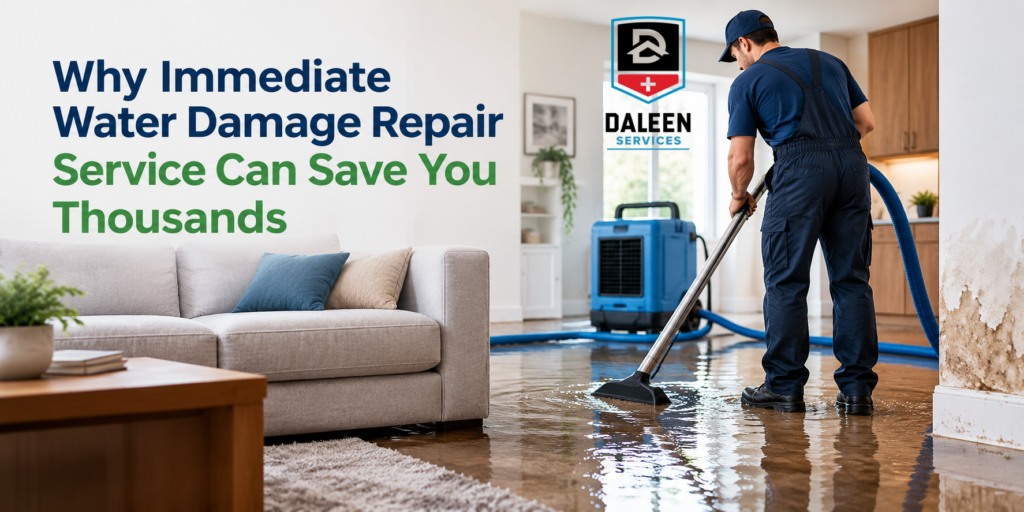
Water damage rarely stays limited to the spot where it first appears. A leaking appliance, burst pipe, overflowing fixture, roof leak, or flooded basement can allow water to travel beneath flooring, behind walls, and into insulation. What looks like a manageable cleanup can become a much larger restoration project if moisture remains inside the building.
Calling a professional water damage repair service quickly can help limit the affected area, reduce damage to building materials, and prevent repair costs from growing. The goal is not simply to remove visible water. Proper restoration involves finding where moisture has traveled, removing damaged materials when necessary, drying the structure, and addressing the original source of water.
Why Water Damage Gets More Expensive with Time
Water can move through a property faster than many homeowners expect. Drywall, wood, insulation, carpeting, subflooring, and other porous materials can absorb moisture even after standing water has been removed.
As moisture spreads, the scope of repair can increase. A small plumbing leak that initially affects one section of flooring could eventually involve the subfloor, baseboards, drywall, and nearby rooms.
Fast water damage mitigation focuses on controlling this progression. Professionals can identify affected areas and begin removing water before additional materials become saturated.
The longer drying is delayed, the more materials may require repair or replacement.
1. Fast Water Extraction Can Limit Structural Damage
Standing water can affect much more than furniture and flooring. Depending on the source and duration of exposure, moisture can reach wall cavities, floor assemblies, framing, and other structural materials.
A professional water damage repair service uses extraction and drying equipment to remove accumulated water and address moisture that remains within building materials.
For homeowners, prompt residential water damage restoration can make a major difference in how much of the property can be saved. Early intervention gives restoration professionals an opportunity to dry salvageable materials before deterioration becomes more extensive.
2. Hidden Moisture Can Lead to Expensive Repairs
One of the biggest challenges with water damage is that the visible area may not show the full extent of the problem.
For example, water from an upstairs bathroom may appear as a ceiling stain downstairs, but moisture could also be present in insulation, flooring, drywall, or wall cavities.
An experienced water restoration company can use moisture meters and other inspection methods to locate moisture that may not be obvious from the surface. Finding these areas early allows the drying process to address the actual extent of the damage.
This is why simply mopping the floor and running household fans may not be enough after significant water intrusion.
3. Quick Drying Can Reduce the Risk of Microbial Growth
Damp building materials can create conditions where microbial growth may develop. Temperature, humidity, the type of material, and the amount of moisture can all influence how quickly problems arise.
The practical response is to address unwanted moisture as soon as possible.
A professional water damage cleanup company can remove standing water, position drying equipment, monitor moisture levels, and track drying progress.
Quick action can reduce the possibility of a relatively contained water incident developing into a more complicated restoration project.
4. More Building Materials May Be Salvageable
Replacement is often one of the biggest expenses associated with water damage.
Hardwood flooring, drywall, cabinets, trim, carpeting, and other materials may sometimes be dried and retained depending on the source of the water, contamination level, condition of the material, and duration of exposure.
Fast water damage mitigation gives restoration professionals more time to determine what can reasonably be dried and what needs to be removed.
Waiting too long can change the situation. Materials that may have been salvageable shortly after the incident can become swollen, warped, stained, weakened, or damaged beyond practical repair.
Preserving even part of the affected area can reduce material, labor, and reconstruction costs.
5. Professional Assessment Helps Identify the True Scope of Damage
Water restoration should be based on the actual extent of moisture rather than assumptions.
A professional water damage repair service can inspect affected areas, document moisture readings, determine how far water has traveled, and develop an appropriate drying plan.
This assessment can help avoid two costly problems: repairing only visible damage while leaving moisture behind, or removing materials that could have been successfully dried.
If you are looking for a water damage restoration service in Woodstock, ask how the restoration team checks wall cavities, flooring, ceilings, and other concealed areas. You can also ask how drying progress is monitored and how the company determines which materials need removal.
6. Residential Water Damage Requires More Than Surface Cleanup
Homeowners may be tempted to handle smaller water incidents themselves, especially if standing water has already been removed. However, successful residential water damage restoration also requires attention to moisture trapped beneath surfaces.
A professional water restoration company can assess flooring, walls, cabinets, insulation, and other materials that may have absorbed water. The drying process can then be adjusted according to the materials involved and the extent of moisture.
Addressing these areas early can prevent homeowners from completing cosmetic repairs only to find additional moisture-related damage later.
7. Commercial Water Damage Can Interrupt Daily Operations
Water damage in an office, retail property, warehouse, restaurant, or other commercial facility creates another concern: business interruption.
Professional commercial water damage services can address water extraction, structural drying, moisture monitoring, and damaged material removal while considering how the affected space is used.
Fast response can help reduce the amount of property that becomes unusable. This may limit disruption to employees, customers, equipment, inventory, and everyday operations.
For commercial properties, the financial impact of waiting may extend far beyond the cost of physical repairs.
What Should You Do Immediately After Finding Water Damage?
If it is safe, stop the source of the water first. This could mean shutting off the main water supply or turning off the supply line connected to a leaking fixture or appliance. Avoid entering areas where water may have reached electrical equipment or wiring.
Move valuable belongings away from the affected area if they can be handled safely. Photos and videos of visible damage can also be useful for documenting the incident.
Then call a qualified water damage cleanup company. Professional inspection and moisture detection can reveal how far the water has traveled and what needs to happen next.
Act Quickly Before Water Damage Spreads Further
Water damage becomes more difficult and expensive to address as moisture moves into additional materials. Early extraction, inspection, drying, and water damage mitigation can help limit the affected area and reduce the amount of repair work required.
If your property has experienced flooding, a burst pipe, an appliance leak, or another water emergency, Daleen Restoration provides professional restoration support for residential and commercial properties.
Need a dependable water damage restoration service in Woodstock? Contact Daleen Restoration today to schedule an assessment and get professional help with extraction, drying, cleanup, and restoration.
Call at 262-241-5021 to address the damage early and protect your property from more extensive repairs.
 262-214-5021