
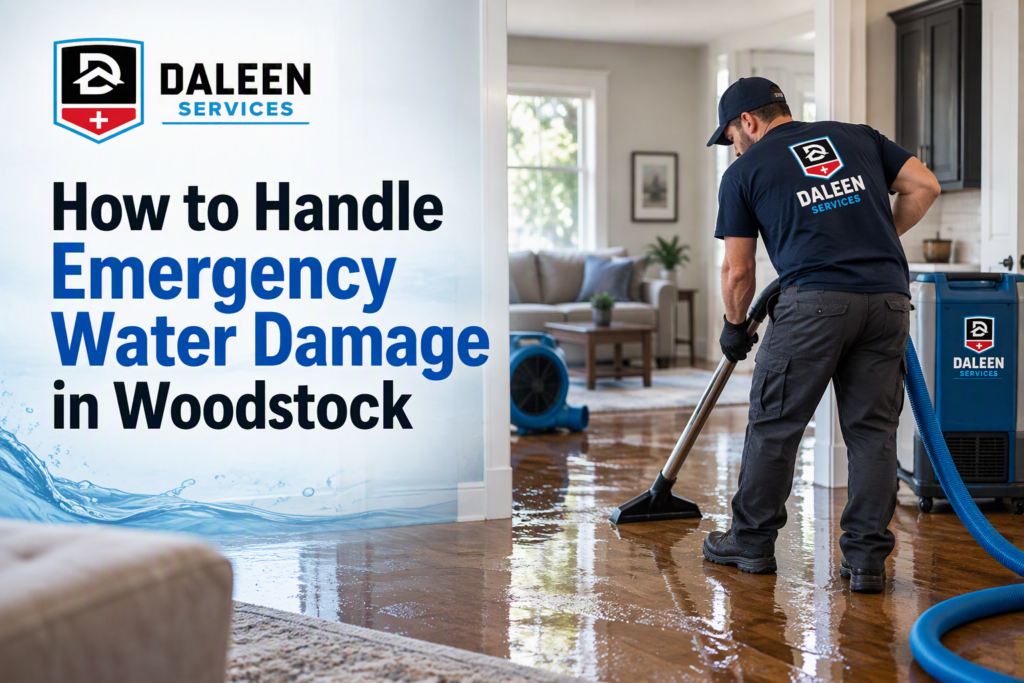
A flooded basement after heavy rainfall, water dripping through a ceiling, or a washing machine overflowing onto the floor can quickly disrupt daily life. Beyond the visible mess, water can travel through building materials, reach electrical systems, and damage areas that initially appear unaffected.
For homeowners in Woodstock, Illinois, emergency water damage repair requires more than removing standing water. The response should focus on controlling the source, limiting moisture movement, identifying damaged materials, and preparing the property for proper drying.
Understanding the right steps can help homeowners make informed decisions before contacting professionals for water damage repair in Woodstock.
1. Determine What Type of Water Has Entered Your Home
Not every water damage situation presents the same level of risk. Identifying the source helps determine how the affected area should be handled.
Water damage generally falls into three categories:
- Category 1: Water from a sanitary source, such as a broken supply pipe. It may become contaminated after contacting building materials.
- Category 2: Water containing significant contamination, potentially from certain appliance discharges.
- Category 3: Highly contaminated water, including sewage backups and floodwater from outside.
Homeowners should avoid direct contact with suspected contaminated water. Professional assessment is particularly important after sewage backups or outdoor flooding.
2. Create a Safe Boundary Around the Affected Area
Water rarely stays within the room where the problem begins. It may move beneath doors, travel along flooring seams, or enter adjoining spaces.
Start by restricting access to damaged areas, especially if electrical hazards, contaminated water, or unstable building materials are present.
If conditions are safe, move unaffected belongings away from the moisture. Avoid walking through standing water near electrical equipment or entering rooms with sagging ceilings.
A professional water damage company in Woodstock can assess the affected areas and recommend appropriate containment measures.
3. Locate the Water Source and Prevent Additional Damage
Stopping the incoming water is one of the most important early actions.
For a broken plumbing supply line, shutting off the main water valve may stop further flooding. A leaking appliance may require closing its dedicated supply valve.
Other situations require different responses. Roof damage may need temporary protection by a qualified contractor, while groundwater entering a basement may require specialized extraction and drainage work.
Do not attempt repairs that involve electrical hazards, unstable structures, or contaminated water.
4. Identify Materials That Need Immediate Attention
Different building materials respond differently to moisture. Understanding these differences helps homeowners recognize why professional drying may be necessary.
|
Material |
Common water damage concerns |
|
Drywall |
Softening, swelling, and moisture trapped inside cavities |
|
Hardwood flooring |
Cupping, warping, and separation |
|
Carpeting |
Moisture retention in carpet padding |
|
Insulation |
Reduced performance and trapped moisture |
|
Cabinets |
Swelling, peeling finishes, and weakened joints |
Some materials can be dried successfully, while others may require removal. The decision depends on contamination, exposure duration, and material condition.
5. Prevent Water From Reaching Unaffected Rooms
A water emergency can become more expensive if moisture spreads into additional living areas.
For example, water from an upstairs bathroom may travel through floor openings and affect the ceiling below. Basement flooding can move beneath finished flooring and into wall assemblies.
Homeowners can help by keeping people away from wet areas and moving dry belongings out of the affected space if it is safe.
Avoid placing household fans near sewage-contaminated water, as uncontrolled airflow may spread contaminants.
Professional residential water damage restoration focuses on identifying the full extent of moisture intrusion, not simply cleaning the visible puddles.
6. Recognize Signs of Water Damage That Is Not Immediately Visible
Visible flooding is only one indication of a moisture problem. Water can remain trapped behind walls, beneath flooring, and inside structural cavities.
Watch for these warning signs:
- Paint bubbling or peeling
- Darkened patches on ceilings
- Flooring that feels uneven or soft
- Persistent musty odors
- Swollen wooden trim or baseboards
- Dampness returning after surface cleaning
These symptoms do not always indicate extensive damage, but they warrant investigation.
A qualified water damage restoration company may use moisture meters and other inspection equipment to identify affected materials and monitor drying.
7. Understand the Difference Between Drying and Restoration
Removing standing water is only the beginning of the recovery process.
Water extraction removes accumulated liquid using pumps or extraction equipment.
Structural drying addresses moisture retained inside flooring, walls, and other building materials. This may involve commercial dehumidifiers, air movers, and regular moisture measurements.
Restoration involves cleaning, removing unsalvageable materials, and repairing damaged portions of the property.
The process can take several days or longer, depending on the amount of water, affected materials, and environmental conditions.
Homeowners should avoid closing walls or installing replacement flooring before appropriate drying has been completed.
8. Keep Accurate Records for Insurance and Repairs
Documentation can make communication with insurers and restoration contractors more straightforward.
Photograph damaged rooms, furniture, flooring, and the suspected source of water intrusion before major cleanup, provided doing so is safe.
Maintain records of emergency services, repair estimates, discarded belongings, and temporary living expenses.
Contact your insurance company promptly. Standard homeowners insurance may cover certain sudden and accidental water losses, while flooding from outside typically requires separate flood insurance.
Ask your restoration contractor for written estimates and moisture documentation where available.
9. Reduce the Risk of Another Water Emergency
Once the property has been restored, review the conditions that contributed to the damage.
Practical preventive measures include inspecting appliance hoses, repairing plumbing leaks, cleaning gutters, checking sump pump operation, and monitoring basement drainage.
Woodstock homeowners should also pay attention to seasonal conditions, including freezing temperatures that may contribute to burst pipes and heavy rainfall that can overwhelm drainage systems.
Regular maintenance cannot prevent every emergency, but it can help identify problems before they cause extensive property damage.
Contact Daleen Services for Water Damage Services in Woodstock
Water damage can affect more than the area where water first appears. Prompt action, careful moisture assessment, and professional drying can help limit additional damage and support a more organized recovery.
If your home has experienced a plumbing failure, basement flooding, or unexpected water intrusion, contact Daleen Services to discuss your restoration needs.
Learn more about water damage repair services in Woodstock, IL and reach out to Daleen Services for assistance with assessing and addressing water-related property damage.
 262-214-5021