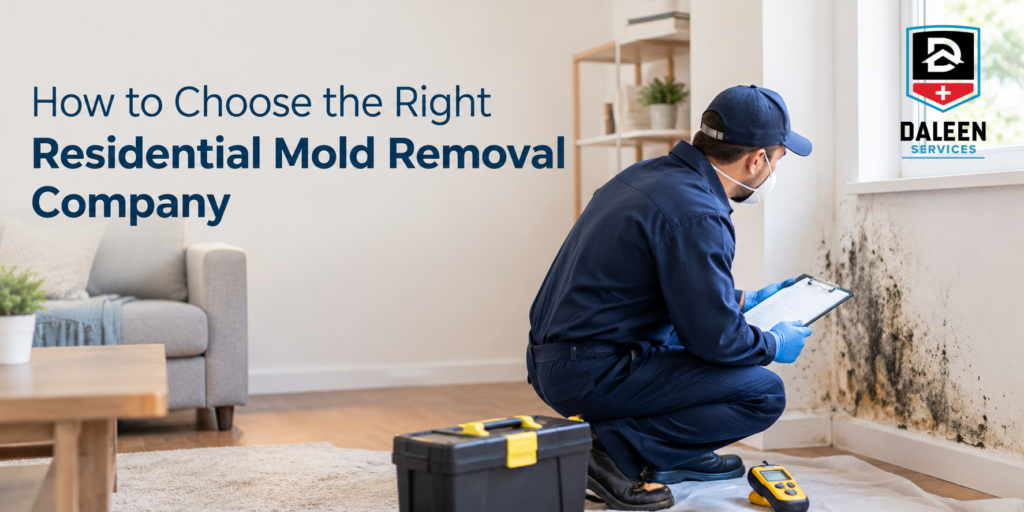
Finding mold in your home can quickly become more than a cleaning concern. Mold may appear around windows, inside attics, behind drywall, near plumbing leaks, or in areas affected by excess moisture. What you can see on the surface may not always show the full extent of the problem.
Choosing a mold removal company, therefore, should involve more than calling the first contractor you find online. Homeowners need to understand how the company investigates moisture, determines the affected area, contains the work zone, removes contaminated materials, and addresses conditions that could allow mold to return.
If you are comparing residential mold removal services, the following factors can help you make a more informed decision.
1. Look for Experience With Residential Mold Problems
Residential mold projects can vary considerably. A small area around a window is different from mold growth across attic sheathing or contamination caused by a long-term plumbing leak.
Ask how much experience the company has with problems commonly found in homes, including:
- Attic mold
- Basement and crawl space mold
- Mold following water damage
- Bathroom and kitchen moisture problems
- Mold behind walls or ceilings
- Condensation-related growth
- Mold around windows and exterior walls
A contractor with residential experience should be able to explain how the location, moisture source, building materials, and extent of contamination affect the removal process.
2. Ask How the Mold Problem Will Be Assessed
A responsible contractor should not base an entire project on a quick visual glance.
The first step should be understanding where mold is present and what may be causing it. In some situations, further inspection or testing may be appropriate. If testing is recommended, ask why it is needed and how the findings will affect the work plan.
If you are searching for the best mold inspection company, focus less on marketing claims and more on the inspection process. Ask what areas will be examined, how moisture will be evaluated, and how the results will be documented.
A detailed assessment can help prevent unnecessary work while identifying areas that may otherwise be overlooked.
3. Find Out How the Company Handles the Moisture Source
Removing visible mold without addressing moisture can leave the underlying problem unresolved.
Water may be entering the home because of a roof leak, plumbing issue, foundation seepage, poor ventilation, high indoor humidity, or condensation. Before hiring a contractor, ask how moisture-related conditions are identified during the project.
The mold contractor may not perform every repair themselves, but they should be able to explain why moisture control matters and point out conditions that require attention.
4. Review the Proposed Containment Process
Mold remediation can disturb spores and contaminated dust. For larger or more involved projects, the affected area may need to be separated from other parts of the home during removal.
Ask the company what containment methods will be used and how nearby rooms, furnishings, HVAC components, and household belongings will be protected.
Depending on the project, contractors may use plastic barriers, controlled airflow, HEPA-filtered equipment, or other measures designed to limit the movement of airborne particles.
The exact approach should be based on the location and extent of the mold problem rather than a single method used for every property.
5. Pay Special Attention to Attic Mold Experience
Attics present their own set of challenges. Mold growth may be connected to roof leaks, inadequate ventilation, air leakage from living spaces, or moisture accumulation on roof sheathing.
If the affected area is above your living space, consider working with an experienced attic mold restoration company. Ask how the contractor will inspect the roof decking, framing, insulation, ventilation, and visible moisture conditions.
Professional residential attic mold services should focus on both the affected materials and the conditions contributing to mold growth. Simply treating visible discoloration without investigating moisture may leave homeowners dealing with the same issue later.
6. Ask What Will Be Removed and What Can Be Cleaned
Not every mold-affected material needs to be handled in the same way.
Some nonporous or semi-porous surfaces may be cleaned using appropriate remediation methods. Other materials, particularly heavily contaminated porous materials, may need to be removed and discarded.
Ask the contractor to identify which materials will be cleaned, treated, removed, or replaced. The scope should clearly explain the reasoning behind these decisions.
This is especially important if drywall, insulation, wood components, flooring, or other building materials are involved.
7. Request a Clear Written Scope of Work
Before work starts, ask for a written description of the proposed project.
The document should explain the affected areas, planned containment, removal or cleaning procedures, equipment being used, estimated project stages, and any restoration work included after remediation.
A written scope also makes it easier to compare companies. Two contractors may quote the same mold problem but propose very different approaches.
Avoid choosing a provider based only on the lowest estimate. The scope of work matters just as much as the number at the bottom of the proposal.
8. Check How the Home Will Be Restored After Removal
Mold remediation can sometimes involve removing drywall, insulation, trim, flooring, or other materials to access contaminated areas. Once remediation is completed, homeowners may need additional repairs.
Ask if the company also provides residential restoration services or coordinates the reconstruction phase.
Having a clear plan for what happens after mold removal can reduce confusion between remediation and repair. You should know which parts of the project are included and which require another contractor.
9. Ask About Documentation and Final Project Review
Good communication should continue throughout the job.
Ask how progress will be documented and what information you will receive after the work is completed. Depending on the project, documentation may include photographs, descriptions of removed materials, moisture findings, completed work, or recommendations for preventing future moisture problems.
You should also know what conditions indicate that the remediation work is complete and if any post-remediation evaluation is recommended.
Questions to Ask Before Hiring a Mold Removal Company
Before signing an agreement, ask:
- What areas of my home will you inspect?
- What appears to be causing the moisture problem?
- What containment methods will be used?
- Which materials will be cleaned and which will be removed?
- How will contaminated materials be taken out of the home?
- Do you handle attic mold?
- Is restoration included after remediation?
- What documentation will I receive after the project?
- Are there any steps I need to take before work begins?
Clear answers can tell you a great deal about how a company approaches residential mold projects.
Choose a Company That Looks Beyond Visible Mold
The right contractor should approach mold as a moisture and building-material problem, not simply as a stain that needs to disappear. Strong residential mold removal services begin with understanding the affected area, identifying contributing conditions, creating an appropriate work plan, and explaining each stage to the homeowner.
Take Action Before Mold Damage Spreads
Visible mold or persistent moisture should not be left unaddressed. Daleen Restoration provides residential mold removal services and residential restoration services to identify affected areas, address mold damage, and help restore your home.
Contact us today to schedule your mold assessment and take the first step toward addressing the problem before it affects more areas of your home.
 262-214-5021